Learn minor surgery by actually doing it.
Practical, clinically focused training for healthcare professionals who want the confidence, technique and governance knowledge to take minor surgery back into everyday practice.
Recognised accreditation. Practical training. Real clinical relevance.
Our Minor Surgery programme is accredited by the Royal College of Surgeons of Edinburgh and NHS England, with a long-standing track record of practical procedural education for healthcare professionals.
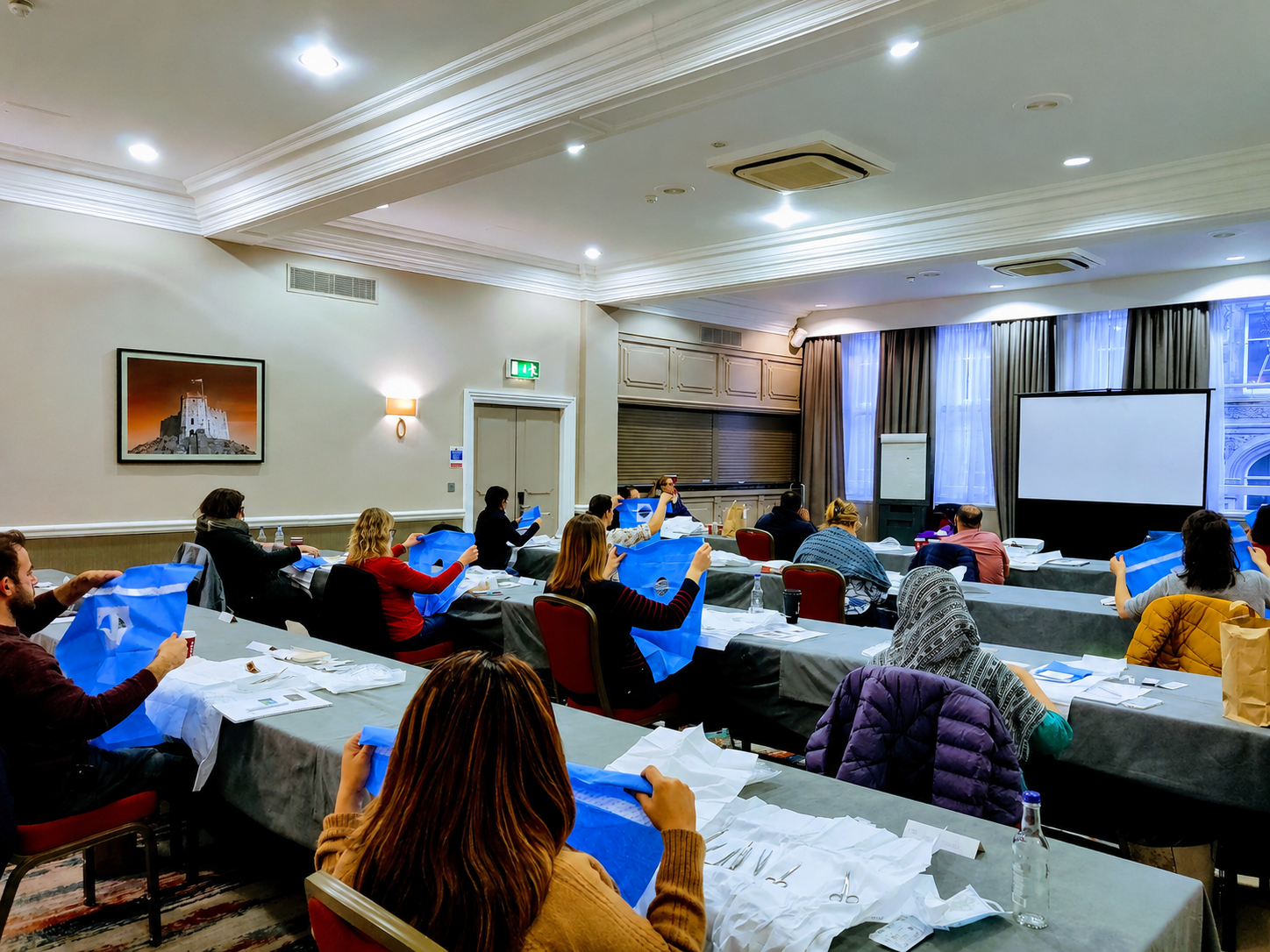
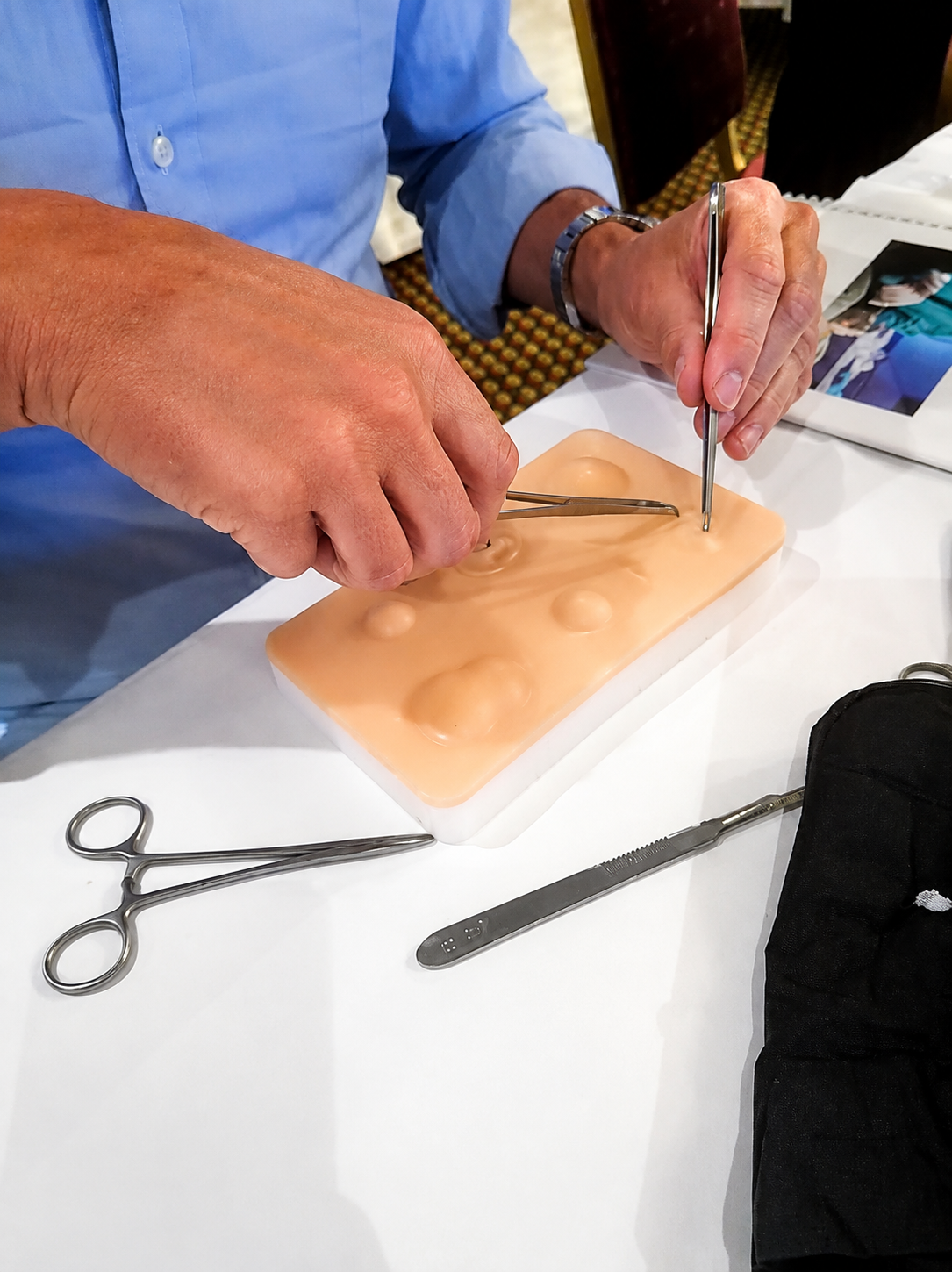
Less passive learning. More time with instruments in your hands.
From complete beginners to experienced clinicians returning for an update, the course is built around the decisions, techniques and practical challenges you face when delivering minor surgery in real clinical settings.
Most courses end when the teaching day ends.
Ours doesn’t.
Come and shadow us in a real minor surgery clinic after your course — completely free.
Moving from a training model to a real patient is a different experience. That is why delegates are offered the opportunity to join us in clinic and see minor surgery being delivered in everyday practice.
Observe patient selection, consent, procedural technique, workflow, aftercare and the practical realities of running a safe minor surgery service.
Starting out or coming back for an update?
Choose the format that best matches your current experience.
2-Day Minor Surgery Course
For clinicians developing or consolidating their minor surgery skills, combining theory, practical technique, governance and assessment.
1-Day Minor Surgery Update
A focused refresher for clinicians with previous minor surgery experience who want to revisit technique, complications and governance.
From recognising the lesion to running the service.
The programme covers both the procedure itself and the clinical systems that sit around safe minor surgery.
Clinical & procedural skills
- ✓Skin anatomy and lesion recognition
- ✓BCC assessment and management principles
- ✓Local anaesthesia, ring and field blocks
- ✓Incision and ellipse planning
- ✓Elliptical excision
- ✓Cyst and lipoma excision
- ✓Incision and drainage
- ✓Snip, shave and curettage techniques
- ✓Ingrowing toenails
- ✓Simple, mattress, deep dermal and subcuticular suturing
Aftercare, governance & service design
- ✓Wound management and suture removal
- ✓Histology and follow-up
- ✓Recognising and managing complications
- ✓Consent and medicolegal considerations
- ✓CQC and regulatory considerations
- ✓Facility and equipment requirements
- ✓Support staff and workflow
- ✓Minor surgery contracts and service setup
- ✓Infection control and audit
- ✓Practical troubleshooting from experienced clinicians
Take the learning back to clinic.
Useful equipment, documents and opportunities designed to support you after the course ends.
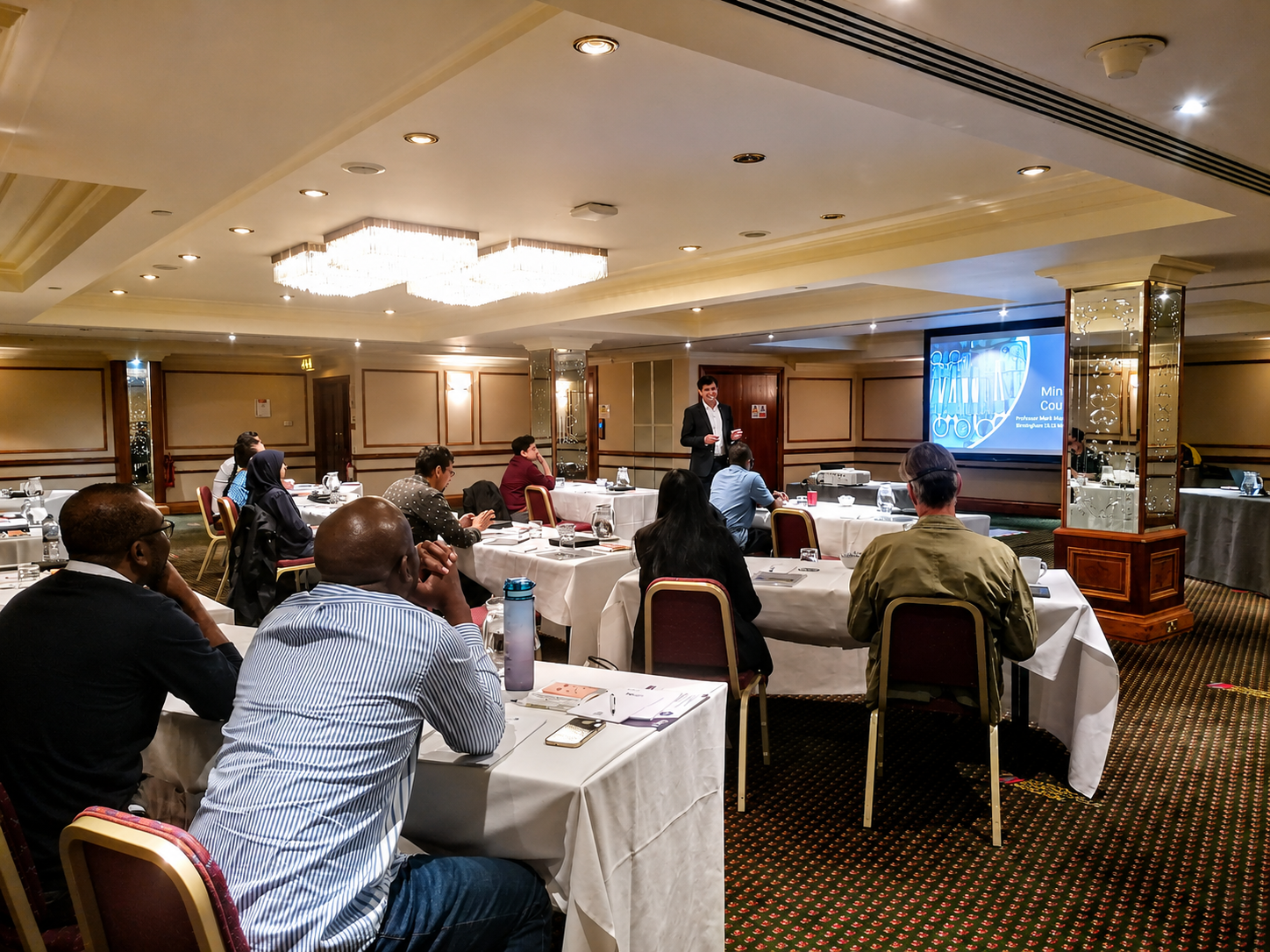
Printed material for notes and future reference.
Equipment to support continued skills practice.
Practical resources for continued rehearsal after the course.
Consent documentation, wound aftercare resources, Minor Surgery DES and infection-control audit material.
Structured direct observation of your procedural skills in the simulated environment.
Join us in clinic to observe minor surgery being delivered in real clinical practice.
Provided during the course.
Booking Minor Surgery and Joint Injections?
Save when you book both practical courses together with our multi-course package.
Choose your date
One course per row, one clear booking action. Select your preferred location and book directly below.

Manchester
Manchester M1 3DG

Oxford
Godstow Road, Oxford

Birmingham
Bickenhill, Solihull B92 0EJ
Birmingham
Bickenhill, Solihull B92 0EJ

Cambridge
Cambridge

London
18 Lodge Road, London NW8 7JT

Manchester
91 London Road, Manchester M1 2PG
Oxford
Godstow Road, Oxford

Leicester
Granby Place, Leicester LE1 6ES
Birmingham
Bickenhill, Solihull B92 0EJ
London
18 Lodge Road, St. John’s Wood, London NW8 7JT
Learn from clinicians who live this work.
Experienced educators with substantial clinical, academic and procedural experience.

Professor Abbas Tejani
Honorary Professor of Primary Care and Medical Education, GP Partner, Occupational Physician and founder of Cornerstone Medical Education.
Read more
Professor Tejani is actively involved in undergraduate and postgraduate medical education and has held senior healthcare leadership positions.
He is also an experienced minor surgeon, undertaking a substantial volume of minor surgical procedures in clinical practice.

Professor Fahad Rizvi
GP, academic and highly experienced community minor surgeon with a longstanding passion for procedural education.
Read more
Professor Rizvi brings extensive surgical and primary care experience to the programme and is committed to bridging the gap between specialist surgical knowledge and community practice.
His teaching combines clinical technique with service design, governance and the practical realities of delivering safe minor surgery outside hospital.
Confidence that follows you back into practice.
The themes that come up again and again in feedback from our delegates.
“Loved this course. Having never done surgery before, I was worried but was pleasantly surprised how confident I felt after leaving the course. I now practice Minor Surgery at my GP Practice.”
“The balance between theory and hands-on practice was perfect. The practical tips and surgical tricks will be invaluable in clinical practice.”
“Thoroughly recommend this course — even if it was on the moon I would have travelled there!”
“Plenty of time for one-to-one feedback and observation. The team are approachable and have a real passion for teaching.”
Before you book
Who can attend the Minor Surgery Course?
The course supports professionals at different stages of their minor surgery journey, including doctors, nurses, paramedics and other appropriately registered healthcare professionals.
Beginners can build their foundations, while experienced clinicians can refine technique or use the dedicated update course as a skills refresher.
What accreditation does the course have?
The programme is accredited by the Royal College of Surgeons of Edinburgh and NHS England.
What is the DOPS assessment?
Direct Observation of Procedural Skills provides structured observation and feedback on your practical technique within a simulated setting.
How many CPD points do I receive?
The comprehensive 2-day Minor Surgery Course provides 12 CPD points. The 1-day Minor Surgery Update Course provides 6 CPD points.
What does the free clinical shadowing involve?
Course delegates are offered the opportunity to join us in clinic after the course at no additional cost, allowing you to observe minor surgery in a real clinical environment and see how patient selection, consent, workflow, technique and aftercare come together in practice.
Can I practise independently after completing the course?
The course is high-quality continuing professional development rather than a standalone licence to practise independently.
Requirements vary according to your profession, employer and local governance arrangements and may include supervised practice, mentorship or local competency sign-off.
Non-prescribers will also require appropriate local arrangements for use of local anaesthetic, such as a PGD or PSD where applicable.
Do you use animal tissue for practical training?
No. The practical elements use synthetic models and animal-free products.
Where are courses held?
Courses are delivered at venues around the UK. Current scheduled locations include Manchester, Oxford, Birmingham, Cambridge and London, with further dates added throughout the year.
This is what hands-on learning looks like.
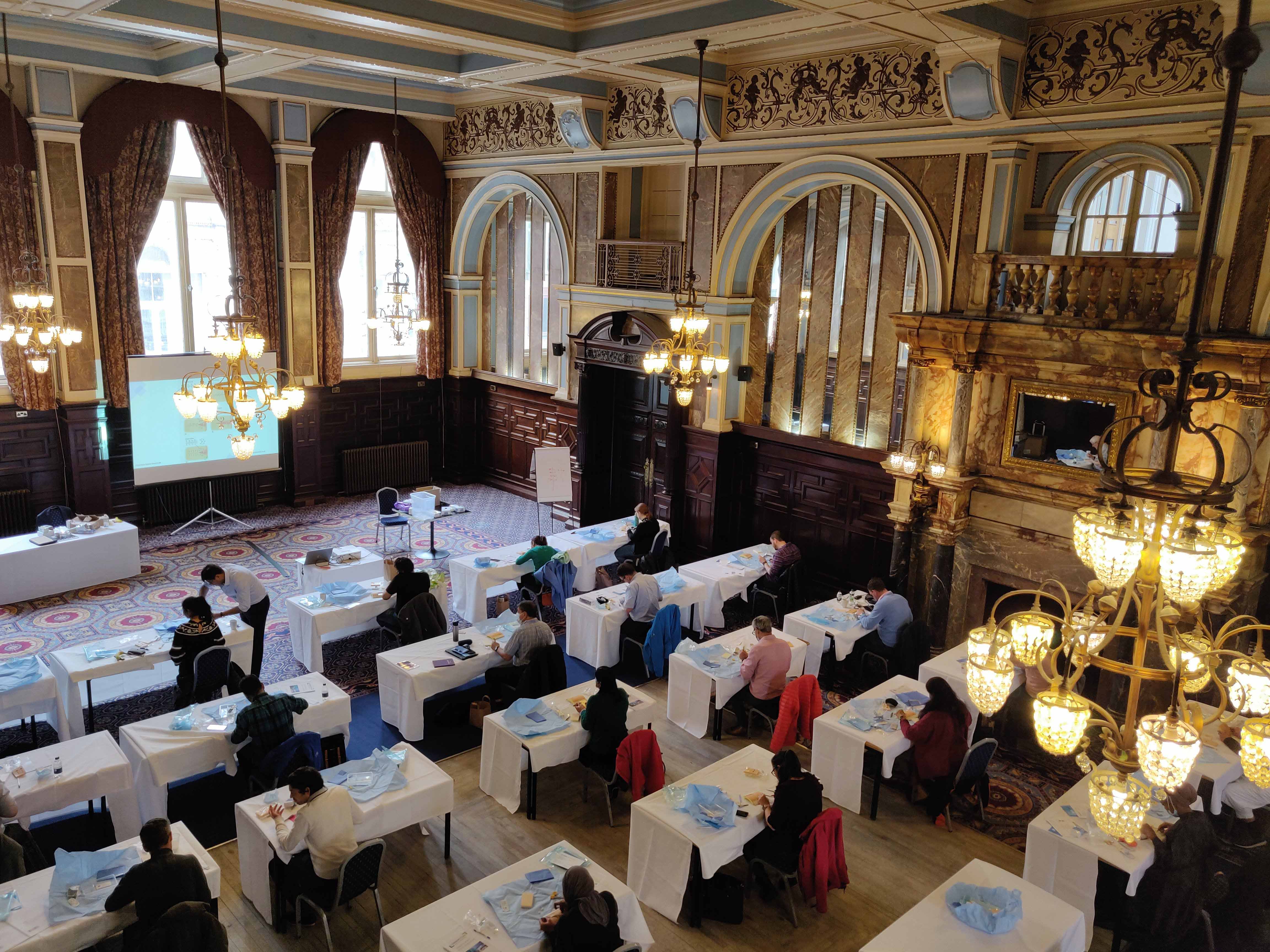
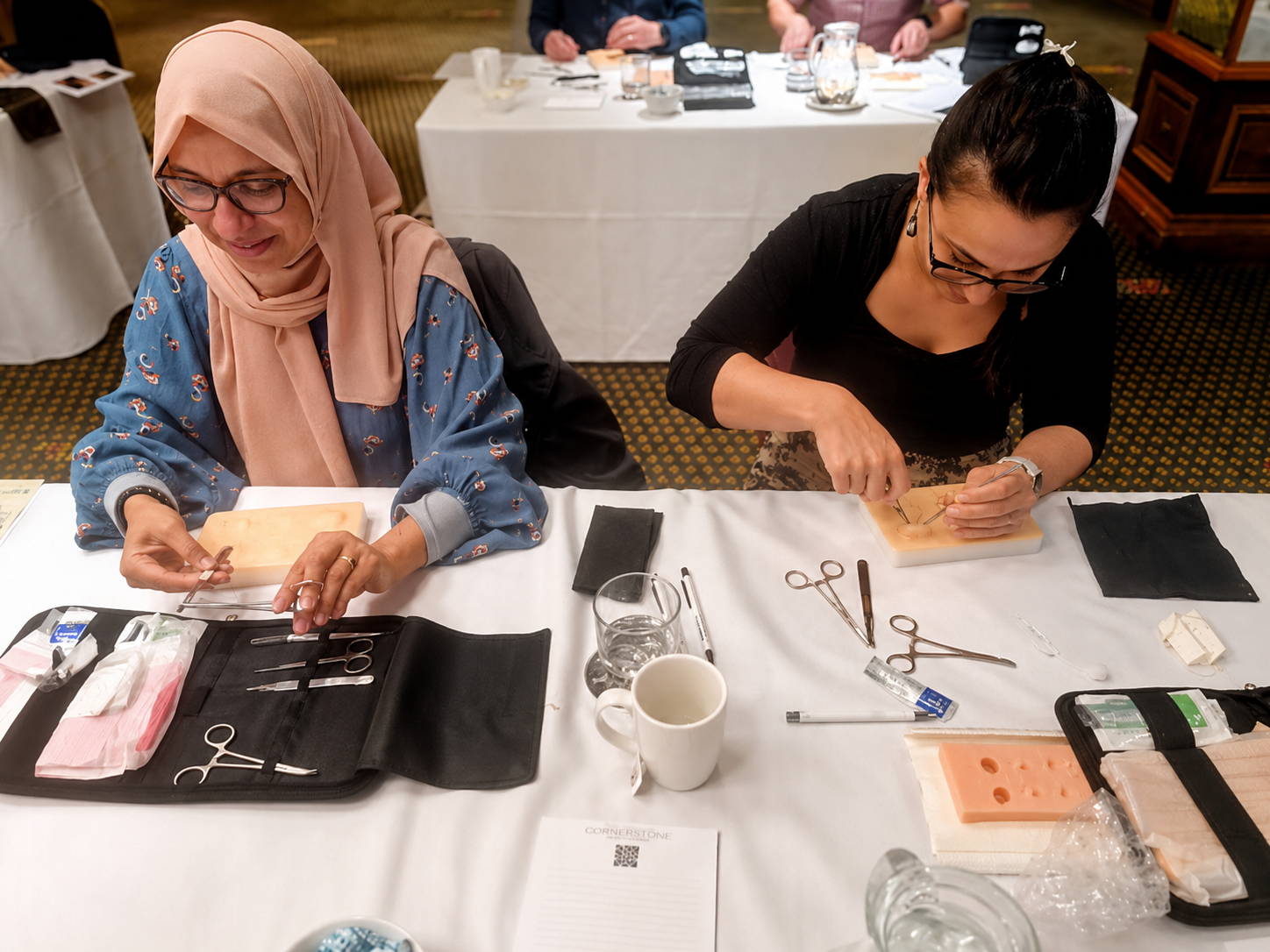


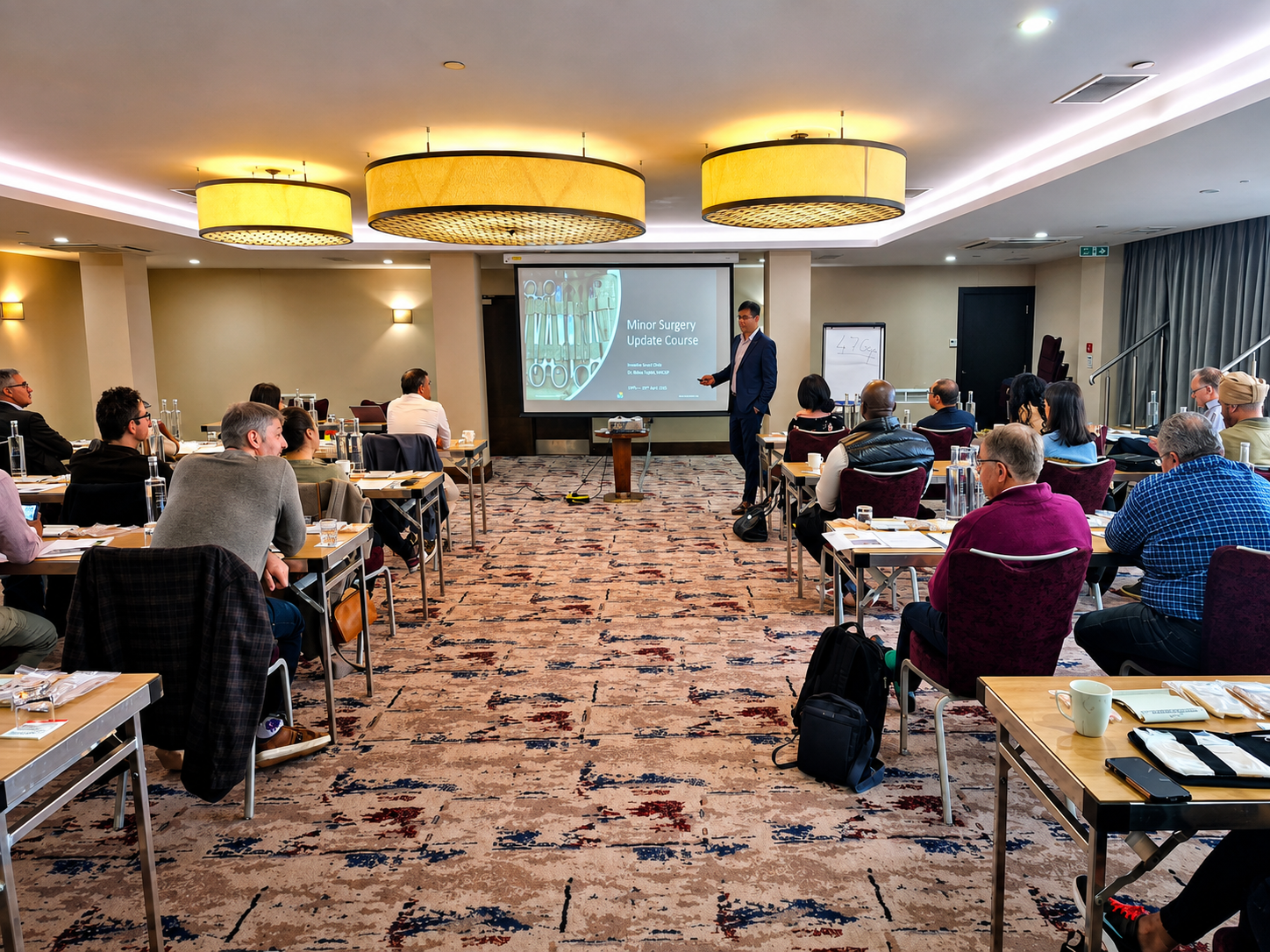
Build the skills. See them in practice. Take the confidence back to clinic.
Choose from our comprehensive 2-day Minor Surgery Course or dedicated 1-day Update Course — with free post-course clinical shadowing available to delegates.